
Instantly Check for Jeep Recalls by VIN: Think Safety First
Stay safe on every drive. Instantly Check for Jeep Recalls to find out about any open safety recalls and learn what repairs your Jeep may need.
How to Check Jeep Recalls by VIN
Looking up Jeep recall information is a simple process that only takes a few minutes from start to finish. To use our tool, follow these easy steps:
Step 1: Enter the VIN
Type the 17-character VIN (Vehicle Identification Number) into the form at the top of this page. You can also check by entering the license plate number and selecting your US state.
Step 2: Search VIN
Click the "Search VIN" button to pull up a preview of the vehicle. You will instantly see details like the year, make, model, trim, engine type, and more.
Step 3: Get Your Jeep Recall Report
Once you review the vehicle preview, proceed to payment to access the full recall details and the complete vehicle history report. Your report is available for download as a PDF so you can save or share it anytime.
What Does a Jeep Recall Mean?
A Jeep recall happens when Stellantis, the manufacturer, or federal safety regulators at NHTSA determine that a vehicle has a defect that poses a risk to safety. When that happens, Jeep is required to notify owners and repair the problem at no charge to them.
For anyone involved in a used Jeep sale, a Jeep safety recall check is not optional if you want to protect yourself. An open recall means the safety issue has been identified, but the repair has not been done yet. This matters a lot, whether you are the one writing the check or handing over the keys.
Jeep Open Recall Facts and Figures: 2025 Statistics
Based on consolidated recall reports under Stellantis/Jeep, the numbers below reflect how many Jeep recalls were issued in 2025 and how many vehicles and models are currently affected by active safety campaigns.
15 Recalls
Jeep issued about 15 recalls due to safety defects.
1 Million+ Vehicles
Over one million Jeep vehicles impacted by major defects
6+ Models
Six or more Jeep models affected across the SUV lineup.
Why a Jeep Recall Check Matters for Everyone Involved
Whether you own a Jeep, plan to buy one, or are in the business of selling them, a Jeep recall check delivers information that protects both safety and money.
Owners
Jeep owners who stay current on recall status can take action before a safety defect turns into a real danger on the road.
Drive With Greater Confidence
Knowing your Jeep has no open recalls means you can get on the road without worrying about a known defect putting you or your family at risk.
Get the Repair Done at No Cost
Recall fixes are paid for by Jeep, not you. But if you never find out about the recall, you might end up footing the bill at a repair shop.
Head Off Bigger Repair Bills
Some recall defects quietly cause damage to other parts over time. Fixing the problem while it is still small prevents it from snowballing into a repair that costs you real money.
Buyers
Buyers who check Jeep recall status before a purchase walk into the deal knowing exactly what they are getting and what leverage they have.
Know the Safety Status Before You Pay
Not every seller will bring up open recalls during a sale. Running your own check puts that information in your hands before you hand over any money.
Turn a Recall Into Negotiating Power
An open recall gives you a solid reason to push for a lower asking price or to ask the seller to get the recall repaired before the vehicle changes hands.
Protect Yourself From Hidden Problems
Skipping a recall check when buying used is a gamble. A few minutes of research now can save you from taking on a safety problem that was never yours to begin with.
Sellers and Dealers
Sellers and dealers who run a Jeep recall check before listing a vehicle are in a much stronger position to close deals cleanly and keep buyers happy.
Start the Conversation on Honest Ground
Buyers respond well to sellers who come prepared. Presenting a current recall report shows that you have done your homework, and the vehicle is ready to go.
Know Your Numbers Before Listing
A Jeep with an open recall needs to be priced with that in mind. The buyer knowing the recall status before you set a price keeps you from losing a deal.
Cut Down on Back-and-Forth
Deals drag on when surprises come up late. Having recall information ready from the beginning means fewer questions, fewer delays, and a faster path to closing the sale.
What Does a Jeep Recall Report Tell You?
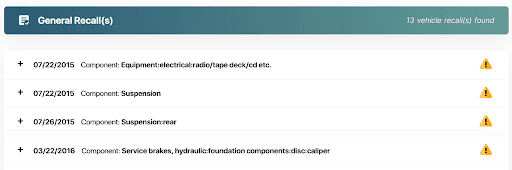
Each recall in the report comes with clear details that help you understand the problem, which parts are involved, and how Jeep plans to fix it.
Recall Date
The date the recall was officially logged with NHTSA or announced by Jeep. This shows how long the issue has been on record.
Affected Components
The exact part or system at the center of the recall, such as the transfer case, airbag module, fuel injectors, brake caliper, or any other component flagged as defective or unsafe.
Campaign Number
The federal tracking number assigned to this recall by NHTSA. This number is used across dealerships and government systems to monitor repair completion rates and manage parts distribution.
Recall Number
Jeep's own internal number tied to this specific recall. The dealer will ask for this when booking your appointment so they can pull up everything they need right away.
Remedy Description
Explains what Jeep will do to correct the defect. The fix might mean swapping out a faulty part, applying a software update, or replacing an entire assembly.
Summary and Note
Shows what triggered the recall and why it is classified as a safety concern. It includes any extra notes about part availability, interim safety guidance, or exceptions to the recall coverage.
Other Records to Find in our Jeep Recall Check Report
Beyond the recall data, a full vehicle history report gives you a much broader look at what the Jeep has been through.

Vehicle Usage Records
Answers if the vehicle served as a personal daily driver, a rental fleet unit, or a commercial work vehicle. Usage history gives you a realistic picture of the wear and care.

Ownership History
Check how many owners the Jeep has had and how long each person held onto it. A vehicle that changed hands frequently and quickly is worth investigating before you buy.

Title Brand Check
Look for title brands like salvage, flood, rebuilt, or lemon law buyback. Any of these on a Jeep's title is a serious signal that the vehicle had major damage.

Accident Records
Review reported collision history, including what type of accident occurred, which part of the vehicle was hit, and whether the airbags deployed during the crash.

Mileage Records
Look at mileage readings reported over the vehicle's life to spot any suspicious gaps or numbers that do not line up.

Lien and Loan Records
Check whether the Jeep still has an active loan or lien tied to it. Buying a vehicle with an open lien can legally bind you to debt that was never yours.

Theft Records
Find out if the Jeep was ever reported stolen. A theft record can cause problems when you try to register the vehicle, get financing, or sell it in the future.

Sales Listing History
Review past sales listings, including where the car was advertised and what prices were asked. Get a realistic view of the Jeep’s market value at different times.

Auction Records
See if the Jeep went through any dealer or public auction sales. Auction records often contain condition grades, photos, inspection notes, and more.
He Got a Full Refund After This Jeep's History Came Out
Tony bought a 2015 Jeep Grand, and the seller promised it was clean and problem-free. One month later, the electrical system started failing. Tony conducted a full Jeep VIN check and finally got the full story.
What the Report Found
- 13 general recall records
- 2 damage records
- Mileage discrepancy
- 1 lien or loan record
- Salvage, auction junk, and flood damage title brands
- The auction record shows the engine would not start
Possible Past Incidents and the Car's Condition
Flood damage explained the electrical faults Tony was already living with. Thirteen recalls, a mileage discrepancy, and an engine that would not start at auction painted a picture of a car that should never have been sold to anyone.
How the Report Helped Tony
Tony took the report to court. The records proved the seller had knowingly hidden serious faults. Tony won his case and walked away with a full refund.
What to Do When You Find an Open Recall on Your Jeep
Spotting an open recall on your Jeep is the first step. Here is how to follow through and get the problem taken care of properly.
- 1
Confirm the Recall
Use our recall tool to check that the open recall also has something to do with your vehicle. You only need to enter the VIN number. - 2
Schedule an Appointment
Get in touch with an authorized Jeep dealership near you. Provide the VIN and the recall number. The dealer will confirm and lock in a date that fits your schedule. - 3
Visit and Get the Repair Completed
Take your Jeep to the dealership on the agreed date. All safety recall repairs are handled at zero cost to you, even if you are the original owner.
How to Find the VIN on Your Jeep
Your Jeep's VIN is a 17-character identifier that is unique to your vehicle. Locating the Vehicle Identification Number (VIN) in these places is the first step to getting an accurate recall search.
On the Vehicle | In the Vehicle’s Paperwork |
Driver’s side dashboard | Vehicle’s registration |
Driver's Side Door Jamb | Title |
Engine block | Insurance policy |
Frame Rail | Maintenance records |
Common Defects Behind Major Jeep Vehicle Recalls
A handful of defect types have come up repeatedly across Jeep's recall history. Here are six that led to significant recall actions, along with the details.
Fuel Tank Fire Risk
In 2013, over 1.5 million Jeep Grand Cherokee and Liberty SUVs were recalled due to rear-impact fuel tank failures causing fires and over 50 deaths.
Remote Hacking Vulnerability
In 2015, around 1.4 million vehicles were recalled after researchers remotely controlled Jeep systems, exposing critical cybersecurity flaws affecting safety systems and driver control.
Hybrid Battery Fire Risk
Between 2020 and 2025, over 320,000 Wrangler and Grand Cherokee 4xe models were recalled due to high-voltage battery defects causing fires, with injury reports recorded.
Engine Contamination Defect
112,859 Jeep plug-in hybrid SUVs were recalled in 2025 after sand left in engines during manufacturing caused damage, engine failure, and increased fire risk.
Loss of Drive Power
In 2025, 91,787 Jeep Grand Cherokee PHEVs were recalled due to software faults in battery control modules, causing sudden stalling and increased crash risk.
Faulty Rearview Camera & Safety Systems
Nearly 80,000 Jeep SUVs were recalled in 2025 due to rearview camera failures and electrical issues, reducing driver visibility and increasing accident risk.
Supported Jeep Models
Our recall check tool works across the complete Jeep vehicle lineup. Search any of the popular models listed below to get started.
Jeep Wrangler | Jeep Liberty | Jeep Grand Wagoneer |
Jeep Grand Cherokee | Jeep Commander | Jeep Avenger |
Jeep Cherokee | Jeep Grand Cherokee L | Jeep Meridian |
Jeep Compass | Jeep Grand Cherokee 4xe | Jeep CJ Series |
Jeep Renegade | Jeep Wrangler 4xe | Jeep XJ Cherokee |
Jeep Gladiator | Jeep Wagoneer | Jeep TJ Wrangler |
Jeep Patriot | Jeep SJ Wagoneer |
|
Access More Helpful Jeep VIN Tools
These tools work, alongside our Jeep safety recall check, to give you access to more information and records about any Jeep.
Jeep VIN Decoder
Decode any Jeep VIN instantly to reveal specifications like the year, make, trim, and production details.
Jeep Options by VIN
Get the factory factory-installed options and packages, and other features.
Jeep MSRP Lookup
Find the original factory sticker price for any Jeep model by year and trim.
Jeep Warranty Check
See what warranty coverage is still active on any Jeep vehicle using the VIN.
Look up any Jeep Recall History Within Seconds
Don’t assume the recall status of your Jeep or the one you’re considering. Check the Jeep recall by VIN now to verify any open safety recalls and access a detailed vehicle history report you can trust and download.
Frequently Asked Questions About Jeep Recall Checks
Checking for any Jeep safety recall is simple and fast using our tool. Just enter your VIN into the form on this page (at the top). It will reveal every open and closed recall traceable to the vehicle.
Yes. Federal law requires that manufacturers cover all safety recall repairs at no charge to the vehicle owner, whether you bought the Jeep new or picked it up secondhand.
Don’t panic. Take the vehicle to any authorized Jeep dealership with your VIN and the recall number. The dealer will confirm whether the recall applies and schedule the repair at no cost to you.
Most safety recalls remain open without an expiration date, but older recalls can sometimes lose parts availability over time. Taking care of it sooner keeps your options open.