

Peter
Author
Adewale Peter is an automotive writer with over six years of experience simplifying complex vehicle information. He has written more than 100 articles and guides covering window stickers, vehicle history reports, VIN lookups, and automotive records that help readers better understand the vehicles they own or plan to purchase. At Jeep Window Sticker, Peter writes about the factory details and documentation that can help owners and buyers verify a Jeep's original configuration. His articles explain how window stickers and VIN-related records can provide information about factory-installed equipment, optional packages, original MSRP, and vehicle specifications. Jeep vehicles can feature different factory equipment combinations depending on their model, trim, and production year. Peter helps readers understand why checking the original vehicle information is important when verifying advertised features or comparing a Jeep's current equipment with its factory specifications. He also explores how vehicle history reports complement window stickers by providing access to available records about title status, accidents, mileage, and other reported events. Peter believes automotive content should be accurate, practical, and easy to follow. Through his Jeep-focused articles, he aims to help readers recognize information gaps, understand the purpose of different vehicle documents, and make more confident decisions based on available evidence.
7 articles published
← All posts
Odometer History Explained: How to Spot Mileage Discrepancies
Odometer history is the sequence of mileage readings recorded for a vehicle over time. To spot a mileage discrepancy, read entries by date and look for a later reading below an earlier one, a current odometer below the last recorded mileage, or a change that does not fit the timeline.
Vehicle History Report vs Window Sticker: What’s the Difference?
A vehicle history report and window sticker answer different questions. The window sticker shows how a vehicle was originally configured and priced when new, while a vehicle history report focuses on later recorded events such as title events, mileage, damage, ownership, or salvage history when those records are available.
What a Window Sticker Cannot Tell You About a Used Car?
A window sticker cannot tell you about a used car's accident history, current condition, active warranty status, open recalls, mileage records, or present market value. It is only a factory reference for how the vehicle was originally configured and priced, and does not provide records of what happened after it left the factory.
How a Window Sticker Helps When Buying a Used Car
The original car window sticker gives you a factory baseline for a used vehicle. You can use it to check the VIN, trim, colors, factory options, packages, and original MSRP against the seller's listing and the vehicle itself before deciding which differences deserve a closer look.
How to Read a Car Window Sticker: What Each Section Tells You
To read a car window sticker, start by confirming the VIN and vehicle identity, then separate standard equipment from factory options and follow the pricing from base MSRP to total MSRP. After that, review warranty, fuel economy, safety, and origin details without confusing original factory information with the vehicle’s current condition.
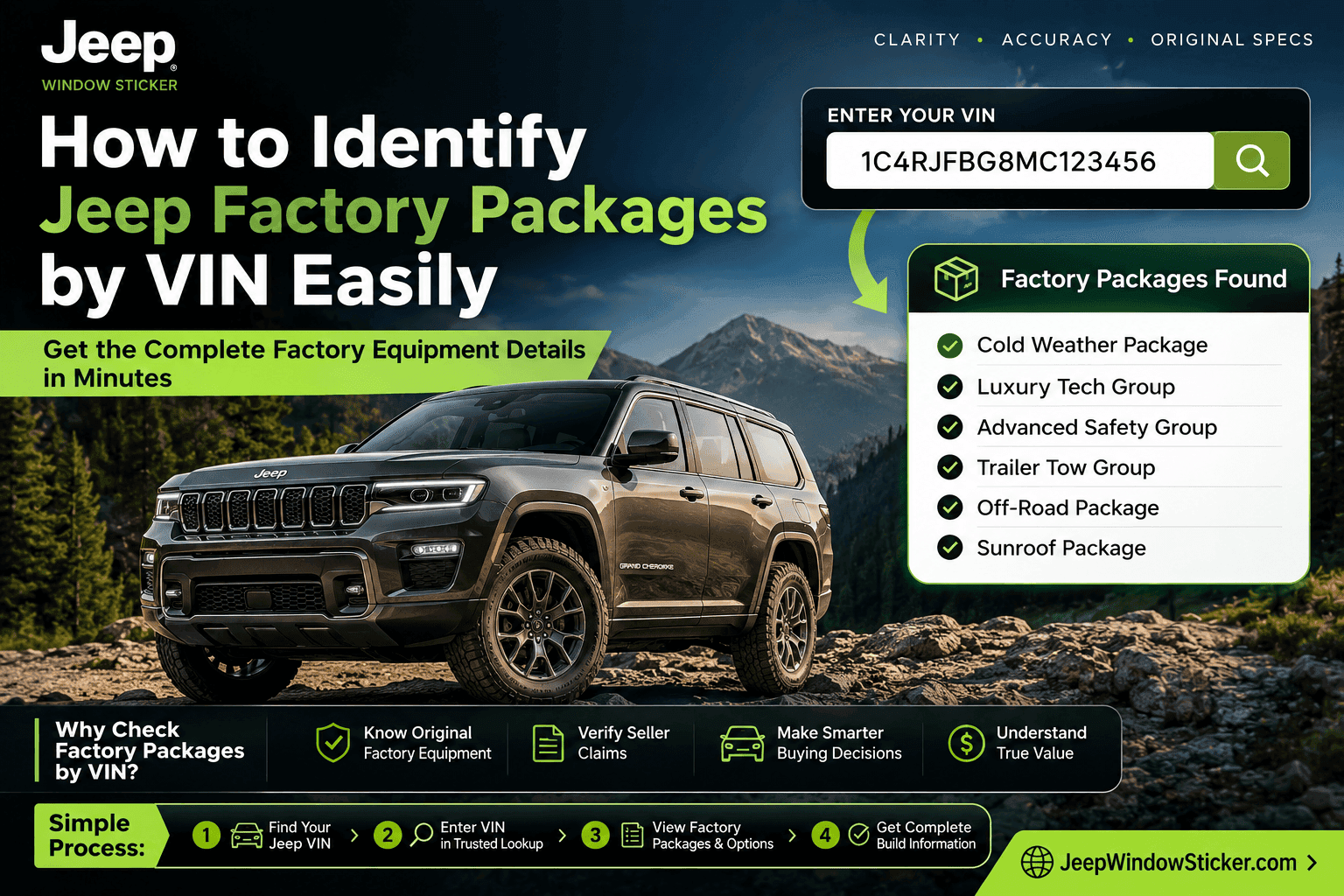
How to Identify Jeep Factory Packages by VIN
Jeep factory packages group several features into one option. Learning how to identify Jeep factory packages can help you confirm what your vehicle had when it left the factory.
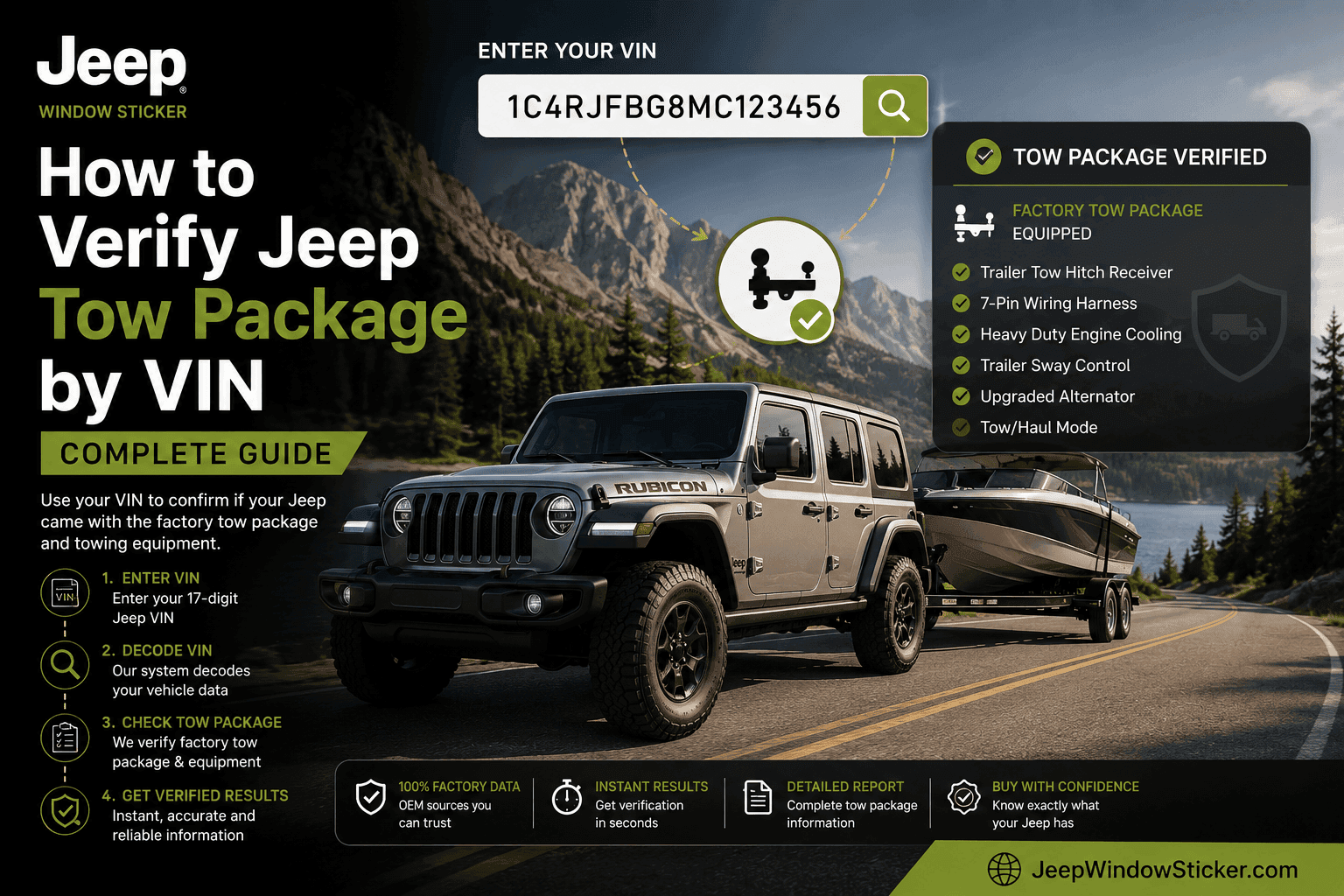
How to Verify Jeep Tow Package by VIN
Knowing how to verify a Jeep tow package by VIN can help you confirm your vehicle's original towing equipment, and the Jeep window sticker is a reliable way to verify it.